
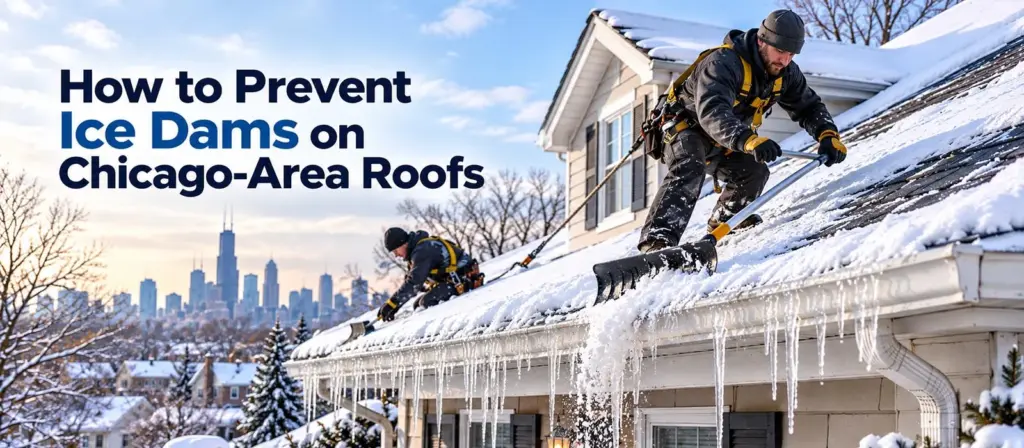
Ice dams form when heat escaping from your house melts snow on the upper part of the roof and the water refreezes at the colder edge. A key long-term way to prevent ice dams is to reduce that heat loss: seal the air leaks between your living space and the attic first, then consider adding insulation. Attic ventilation can also help manage roof temperatures, while an ice barrier beneath the shingles at the eaves helps limit water intrusion if an ice dam forms.
This guide explains what causes ice dams, how homeowners can reduce the risk, and how ventilation, ice barriers and gutters affect prevention and water intrusion. It also covers what to do if an ice dam has already formed and when to consider a roof inspection. The right approach depends on the home’s attic conditions, roofing system and applicable local requirements.
At Northwestern Exteriors Inc., we help homeowners in Plainfield and surrounding Northern Illinois communities assess their roofs through our roof inspection services. We look for issues such as damaged shingles, worn flashing and debris buildup, then provide recommendations based on the roof’s condition.
What Causes Ice Dams?
Ice dams can form when snow covers the roof, higher portions of the roof surface remain above 32°F, and the lower edges stay below freezing over a sustained period (University of Minnesota Extension). Snow melts on the warmer part of the roof, runs down toward the eaves and refreezes. As the ridge of ice grows, meltwater can back up behind it.
Heat escaping from the house is the main source of the uneven roof temperatures that lead to ice dams. UMN Extension notes that the sun causes these temperature differences only in rare cases. In many homes, warm air leaking through ceiling openings, such as gaps around light fixtures, is a major source of heat reaching the attic and warming the roof. Chimneys, leaky attic ductwork, and kitchen or bathroom exhausts that terminate just above the roof can also contribute.
What Damage Can An Ice Dam Do?
An ice dam prevents melting snow from draining off the roof. As water collects behind the ridge of ice, it can work its way through cracks and gaps in the roof covering and enter the attic. From there, moisture can reach roof insulation, wall cavities and ceilings, leaving water stains or damaging materials inside the home. The University of Minnesota Extension’s guidance on ice dams explains how this water intrusion can affect different parts of a house.
The damage may not be limited to a visible leak. Wet insulation can lose effectiveness, and moisture trapped in building materials can create conditions for mold and mildew growth. If water continues to enter the home, the damage can spread to interior finishes and other building materials. Homeowners can also review the National Weather Service’s explanation of roof ice dams for more information about the risks associated with ice buildup.
Homeowners should watch for water stains on ceilings or walls, damp areas in the attic, wet insulation and signs of moisture around the roofline. These signs do not automatically confirm an ice dam, but they warrant investigation, especially during or after periods of snow and freezing temperatures.
How Can You Prevent Ice Dams?
Start in the attic, not on the roof. The University of Minnesota Extension’s guidance on preventing ice dams recommends making the ceiling airtight first to reduce warm, moist air escaping from the living space into the attic. After sealing air leaks, consider adding ceiling or roof insulation to reduce heat loss further. These steps address one of the main conditions that contribute to ice dams.
ENERGY STAR’s attic air-sealing guidance also recommends completing air sealing before adding insulation. Ice dams in winter can be a sign that a home may need attic air sealing, and combining air sealing with insulation can help reduce their formation.
Before starting attic work, check for conditions that need professional attention. Wet insulation, moldy or rotted rafters, exhaust vents discharging into the attic, or inadequate ventilation can signal problems that need to be assessed before air sealing or adding insulation.
If you notice concerns around the roofline or attic ventilation, our team at Northwestern Exteriors Inc. can assess relevant roofing and exterior components through our roof inspection services. We also provide soffit and fascia installation, which can help support proper attic ventilation when these components are part of the issue.
How Do Ventilation, Ice Barriers And Gutters Help?
Preventing ice dams involves more than one part of the roof. Air sealing and insulation help reduce heat loss, while attic ventilation helps manage airflow. Ice barriers provide an extra layer of protection against water intrusion, and gutters carry water away from the roof. Each serves a different purpose, so none should be treated as a standalone solution to ice dams.
Attic Ventilation
A well-designed attic ventilation system allows air to enter through lower openings, such as soffit vents, and exit through higher vents. Baffles help keep insulation from blocking airflow at the eaves.
However, ventilation needs to work alongside effective air sealing and insulation; ventilation alone cannot compensate for significant heat escaping from the home. The soffit is one part of this system.
Our soffit and fascia services at Northwestern Exteriors Inc. include installation and replacement, helping homeowners address these exterior components when their condition or design needs attention.
Ice Barrier at the Eaves
An ice barrier is an underlayment installed beneath the roof covering near the eaves. Its purpose is to help limit water entering the home if melting snow backs up behind an ice dam.
It does not stop ice dams from forming, so it should be considered an additional layer of protection rather than a substitute for reducing heat loss. Coverage requirements vary according to local building codes and roofing specifications.
The City of Aurora’s roofing permit information is one local reference for roofing projects. When planning a roof replacement, ask which underlayment and coverage requirements apply to your property.
Gutters
Gutters collect runoff from the roof and direct it through downspouts, helping move water away from the home’s foundation. Leaves, other debris, loose fasteners, sagging sections, and leaks can interfere with drainage. Keeping gutters clear and in good condition helps them perform their intended role, but it does not prevent ice dams caused by heat escaping into the attic.
If water is overflowing or a gutter is pulling away from the roofline, the system may need attention. We can help homeowners address these issues through gutter repair, replacement, and installation.
When Should Chicago-Area Homeowners Act?
October and early November are useful times to check your roof and attic before winter weather arrives. According to the National Weather Service’s Chicago snowfall climatology, the normal date for Chicago’s first measurable snowfall of at least 0.1 inch is November 18, based on 1991–2020 records at O’Hare. The normal date for the first snowfall of at least 1 inch is December 7. These are historical averages, not forecasts, so snow can arrive earlier.
Before temperatures drop, look for visible roof damage, check that gutters are clear, and watch for signs of moisture in the attic. If you have concerns about your roof’s condition, our roof inspection services can help identify issues that may need attention before winter.
Before Winter Arrives, Have Your Roof Inspected
A roof inspection can help identify visible concerns before winter weather arrives. Our inspections cover shingles, flashing, roof penetrations, ventilation, gutters and drainage, and we recommend scheduling one at least once a year and after severe weather.
If you’re preparing your home for winter in Plainfield or another Northern Illinois community we serve, review our roof inspection services or call (630) 360-4550 to discuss your concerns and request a free estimate. If the inspection identifies roofing issues and possible attic air leaks, ask your roofing contractor and an insulation or home energy contractor how their work can be coordinated to address both concerns.